WhatsRecipe

Main courses

Anelletti alla Palermitana, “Timbale”

A baked ring of anelletti bound in a slow, glossy ragù, layered with sweet peas, silky cheeses, and crisp eggplant—finished like a refined Sicilian “timbale” with a golden breadcrumb crown and clean, modern plating.

6 servingsEasy

Recipe video
Method

  1. 1

    Mise en place + equipment setup (the “chef’s insurance policy”)

    Set oven to 190°C / 375°F. Prepare a ring mold (or deep bundt pan). Brush generously with butter, then coat with breadcrumbs; tap out excess—this is your anti-stick armor.

    Dice onion/carrot/celery into uniform “brunoise” so they melt evenly into the ragù. Grate caciocavallo, dice mozzarella, and dry it on paper towels (wet mozzarella breaks the timbale). Slice hard-boiled eggs.

    If using eggplant: cube it now and salt lightly for 15 minutes to draw moisture; pat very dry.

  2. 2

    Start the ragù: sweat → brown → concentrate

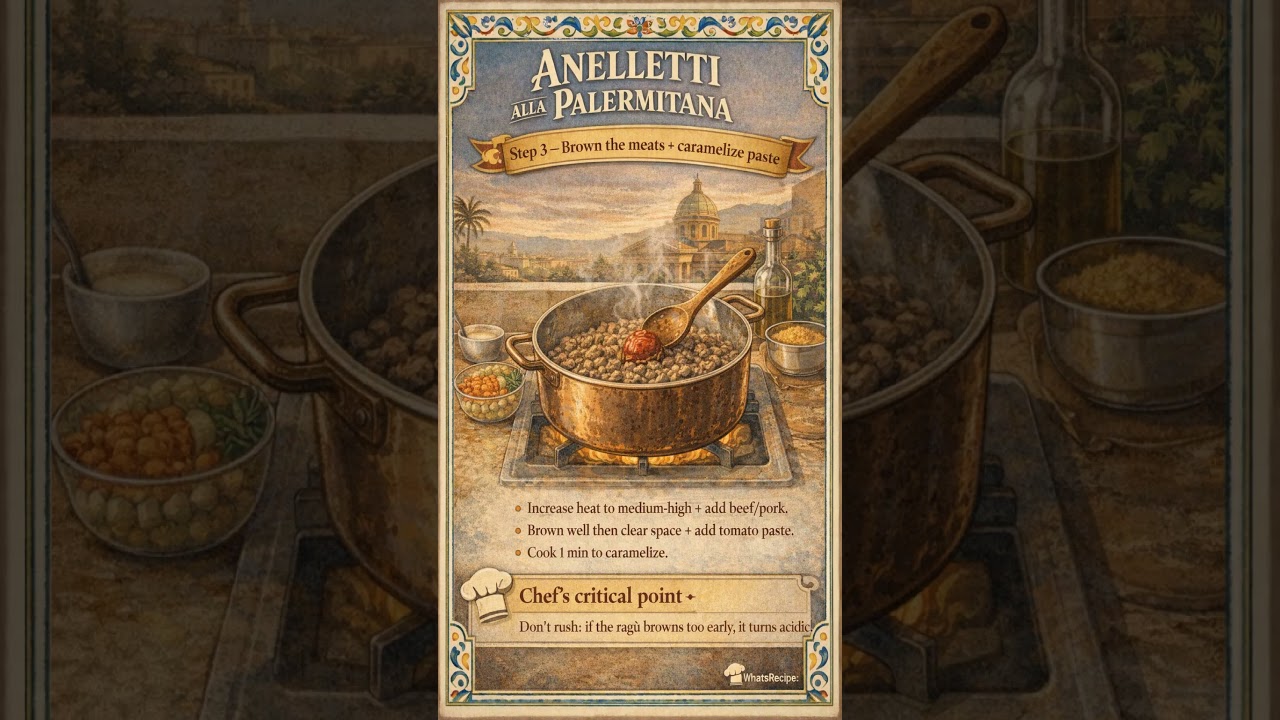
    Warm olive oil in a heavy pot over medium heat. Add onion/carrot/celery with a pinch of salt; cook 8–10 min until glossy and soft (no browning). Add beef and pork; increase heat to medium-high and break up the meat. Cook until the meat loses raw color and begins to brown—this is flavor depth, not dryness.

    Clear a small space in the pot, add tomato paste, and cook 1 minute to caramelize. Stir through.

  3. 3

    Deglaze and braise: wine → passata → slow reduction

    Pour in white wine; scrape the pot clean and reduce until you no longer smell alcohol (2–3 min). Add passata, bay leaf, pepper, and a small splash of warm water/stock. Simmer gently, partially covered, 60–75 min, stirring occasionally.

    In the last 10 minutes, add peas to keep them bright and sweet. If ragù thickens too fast, loosen with a spoonful of warm water.

  4. 4

    Eggplant + breadcrumb crunch (optional but very Palermo)

    Heat neutral oil to 175–180°C / 350–355°F. Fry eggplant cubes in batches 2–3 min until golden; drain well and season lightly.

    In a small pan, toast breadcrumbs dry (or with a teaspoon of olive oil) until pale gold.

  5. 5

    Cook anelletti al dente (timing matters)

    Bring a large pot of water to a rolling boil and salt it well. Cook anelletti 2 minutes less than package directions (they will finish in the oven). Reserve 250 ml / 1 cup starchy pasta water, then drain.

  6. 6

    Finish the pasta: bind like a risotto, not a soup

    Return pasta to the pot. Add most of the ragù (reserve a few spoonfuls for plating), pecorino, and half the caciocavallo. Toss over low heat until the sauce clings. If needed, add a splash of reserved pasta water to make it silky—stop while it still looks “tight,” not wet. Fold in mozzarella last, off heat.

  7. 7

    Assemble the timbale: structure through layering

    Spoon a thin layer of pasta into the prepared mold and press gently to remove air pockets. Add a layer of egg slices, peas, and (if using) fried eggplant. Sprinkle remaining caciocavallo. Repeat once more, finishing with pasta.

    Top with toasted breadcrumbs for a crisp crown. Press lightly, then smooth the surface.

  8. 8

    Bake, rest, unmold, plate like fine dining

    Bake 30–35 minutes until deeply golden and fragrant. Rest 12–15 minutes (this is non-negotiable—resting sets the slice). Run a thin knife around the edge. Invert onto a warm plate, lift the mold, and let it settle.

    For haute plating: cut clean wedges, dot with reserved ragù, add a few peas, and finish with caciocavallo shavings and a tiny herb accent.